Museum Audio Guide Equipment: What a Tender Actually Specifies
Device Count Is Not Just Quantity — It’s Allocation and Redundancy
Tenders specify minimum units per functional zone (e.g., “40 devices for Ground Floor Galleries, 15 for Temporary Exhibition Wing”), not a global total. They also require spares — typically 5–10 % — held onsite, charged and ready for swap. This means production must include fully configured, tested and labelled reserve units, not just extras from the main batch. The G1 AI Guide Player supports zone-based content loading, but device count validation requires serial-number-tracked firmware builds per zone. Units are not interchangeable across zones unless the tender explicitly permits it.Languages Are Defined by Output, Not Just Storage
A tender rarely says “supports 12 languages”. It states: “All exhibit audio must be available in English, German, French, Spanish, Mandarin and Dutch — with spoken output verified at ≤ 5 % distortion at 85 dB SPL, measured at ear position using IEC 60318-4 coupler.” That means language files must be preloaded, voice-tuned, volume-normalised and validated against acoustic test reports. Translation is reference output only; no claim of certified translation quality is made or supported. The A1 AI Pocket Translator shares the same TTS engine but is not tender-compliant for museum use — its form factor, lack of exhibit-trigger logic and absence of multi-zone scheduling disqualify it.Accessibility Is Physical First, Digital Second
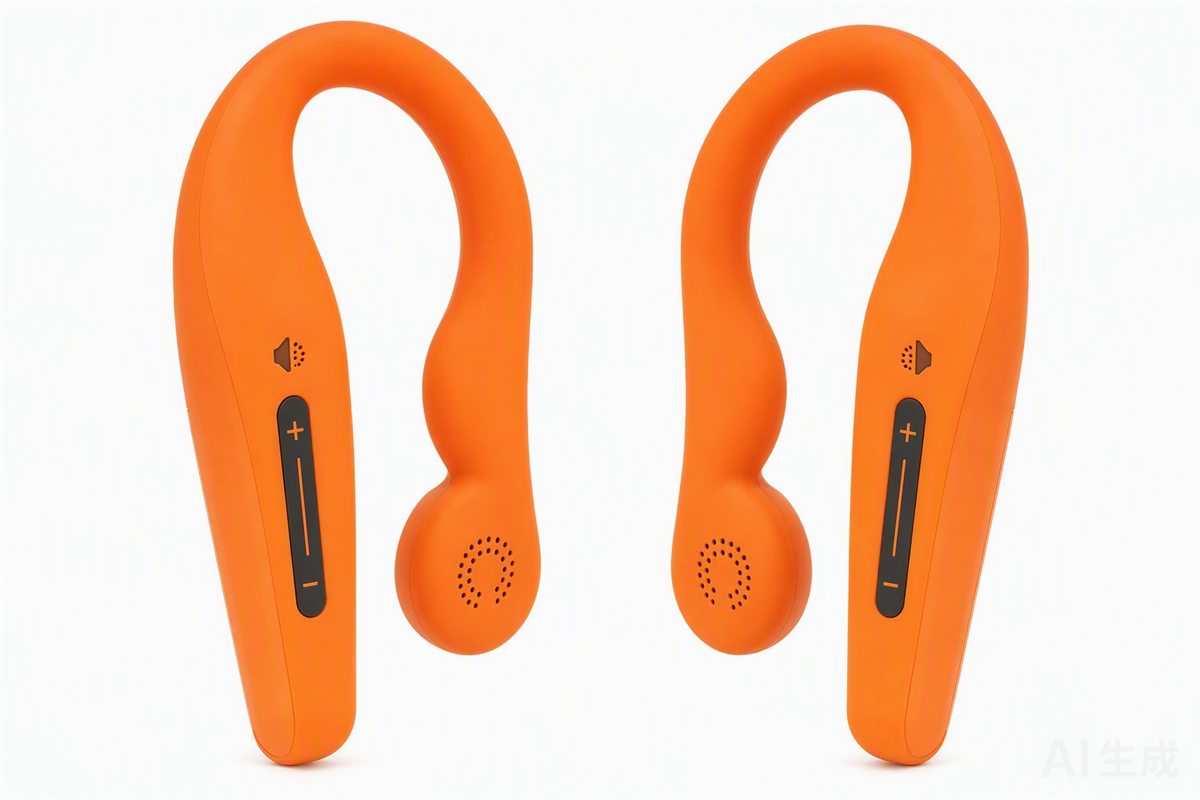
Tenders cite EN 301 549 V3.2.1 or local equivalents (e.g., UK Equality Act 2010 Schedule 2), but compliance hinges on hardware features: tactile controls, mono/stereo toggle, adjustable playback speed (0.7x–1.3x), 3.5 mm jack + Bluetooth 5.2 LE audio, and open-ear compatibility. The G2 open-ear guide receiver meets the latter two, while the G1 guide player covers the rest. No device claims hearing aid compatibility — that remains the responsibility of the end-user’s own device pairing.Evidence Must Match the Hardware Revision — Not the Model Name
A CE RED declaration referencing “G1 v2.1” is invalid if the tendered unit carries G1 v2.2 firmware and a revised antenna layout. Each hardware revision requires its own test scope booked with an accredited laboratory — including EN 300 328 (radio), EN 301 489 (EMC), EN 62368-1 (safety) and RoHS 3. The CE RED document checklist applies equally here. No report is accepted without traceable test dates, lab accreditation numbers and revision-specific photo evidence of PCB markings.What This Process Cannot Do
It cannot validate real-world user experience across diverse visitor cohorts — for example, cognitive load during multilingual switching, wayfinding clarity in noisy atriums, or long-term wear comfort of neck-worn units. No published report measures comprehension retention, emotional engagement or dwell-time correlation. Museums must commission those studies separately. Suppliers claiming “proven visitor engagement uplift” are referencing internal pilot data, not third-party tender-accepted evidence. WingPhoenix does not generate or submit such reports; they fall outside our factory test scope and are not part of any compliance package.Procurement Readiness Checklist
| Requirement | Evidence Type | Source |
|---|---|---|
| Device count per zone | Shipping manifest with serial-numbered units mapped to zones | MOQ, sampling and lead times |
| Language coverage | Preloaded audio files named per ISO 639-1 code, verified via acoustic test report | AI Audio Guides line |
| Open-ear compatibility | Test report confirming BLE LE audio profile + latency ≤ 120 ms | G2 open-ear guide receiver |
| CE RED compliance | Declaration of Conformity + test reports citing EN 300 328, EN 301 489, EN 62368-1 | CE RED document checklist |
| Battery safety | UN38.3 summary + SDS, watt-hour rating printed on each unit | how we build and test |
| Skin-contact nickel release | EN 1811 test report covering actual housing material batch | rental cabinet |
| Firmware version control | Build log signed by QA, linking firmware hash to hardware revision and test report | OEM/ODM services |
- Confirm zone allocation and spare-unit ratio with the museum before quoting.
- Require the tender’s exact language list — not “major European languages” — and verify ISO 639-1 codes.
- Specify open-ear pairing requirement in writing: standalone G2 units, or G1 + G2 co-deployment.
- Book lab testing for the exact PCB and firmware revision — no carry-over from prior builds.
- Validate that all documents list the same hardware revision number, including UN38.3 and EN 1811 reports.
Questions buyers ask
What does a museum tender really require beyond “audio guide device”?
It specifies minimum device count per site zone, language coverage per exhibit, battery runtime under load, physical durability, and documented proof of conformity for each hardware revision — not just model names.
What does finance or compliance need before approving payment?
Signed test reports matching the exact hardware revision shipped, CE RED documentation with EN 300 328 and EN 62368-1 listed, UN38.3 + SDS for every battery shipment, and proof that nickel release (EN 1811) was tested on skin-contact surfaces.
What does a distributor ask when a sample fails EMC in pre-market testing?
Whether the failure occurred on the same PCB revision quoted, whether the lab test scope covered all active radios (BLE + Wi-Fi + optional LoRa), and whether the factory has re-submitted that exact build to an accredited lab for retesting — not just issued a new firmware patch.
What do most suppliers avoid naming directly?
That no single device model meets all tender clauses simultaneously — for example, a guide player may satisfy language storage and headphone jack requirements but fail open-ear accessibility mandates, requiring pairing with the <a href="https://wingphoenixai.com/products/ai-audio-guide/g2-open-ear-guide-receiver/">G2 open-ear guide receiver</a> as a system solution.
Related: more on ai audio guides · buyer guides · customisation tiers