Care Handover Record Requirements for AI Companion Devices
Format Is Fixed, Not Flexible
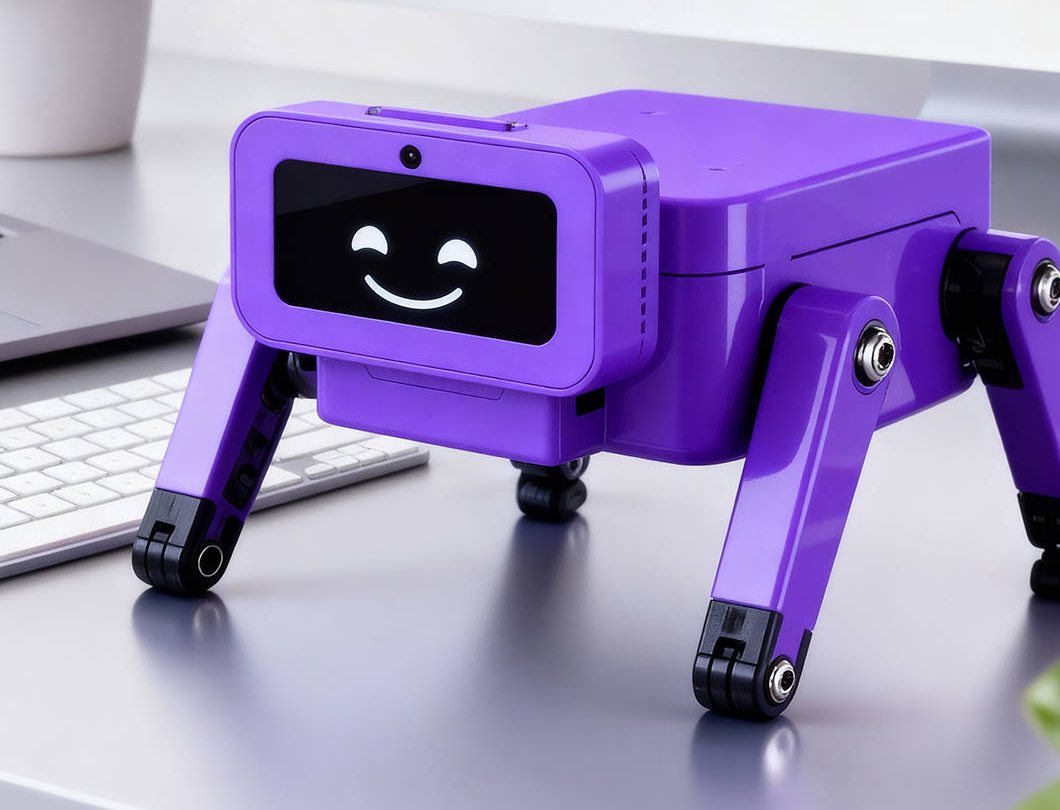
A care handover record from a WingPhoenix AI companion device follows a strict, non-negotiable structure: Event type, UTC timestamp, Device ID, User ID, Firmware revision, Sensor input source, and Raw value with unit. No free-text fields are permitted in the core record. Narrative context — such as “user reported feeling tired” — appears only in a separate, opt-in, manually entered field that is clearly segregated in both UI and export. This separation ensures inspection teams can isolate auditable facts from subjective input. The K1 AI companion robot, for example, logs voice-command timestamps and ambient light levels as discrete entries — never as “user seemed disoriented”. Format adherence is verified at FQC using automated schema validation against the published factory test protocol.
Authorship Means Verified Identity, Not Implication
“Author” is not a placeholder. It is a cryptographically signed identifier tied to an active, provisioned user account — validated at login via OAuth 2.0 or PKI certificate exchange, depending on deployment mode. No device permits anonymous or shared-user handover entries. The R1 AI health ring and R2 smart ring require biometric unlock before generating any record; the H3 health smartwatch enforces PIN + Bluetooth pairing confirmation. This satisfies inspection requirements for attributable authorship without relying on manual signature capture — a known point of failure in paper-based systems.
Timestamps Are UTC, Synchronised and Tamper-Evident
All timestamps originate from the device’s real-time clock, synchronised daily via NTP to a stratum-1 server. Clock drift is logged and flagged if >500ms per 24 hours. Timestamps are written into the record at generation — not at export or display — and cannot be overwritten or backdated. This is tested at IQC using GPS-disciplined oscillators and verified in OQC with time-difference audits across 100-unit batches. The AI wearables line implements this across all models, including rings and smartwatches, ensuring consistency whether deployed in Berlin, Toronto or Tokyo.
Export Controls Define Inspection Readiness
Export is not a button — it is a controlled process. A care handover record exports only in ISO 8601-compliant CSV or JSON-LD format, digitally signed with the device’s embedded certificate. The signature covers all fields, including metadata. Export triggers a firmware-level log entry, visible only to auditors with diagnostic access. No export includes interpreted phrases like “elevated resting heart rate” — only “HRV SDNN: 42 ms”, “SpO₂: 97 %”, “ambient temperature: 21.3 °C”. This aligns with the CE RED document checklist requirement for transparency in data provenance.
What This Process Cannot Do
A care handover record from any WingPhoenix device does not and cannot constitute a clinical handover under national health regulations. It contains no diagnostic inference, no risk stratification, no triage recommendation and no integration with EHR systems. There is no CE-certified software module, no UKCA-validated algorithm, and no notified body report covering clinical decision support — because none is claimed or implemented. Importers should reject any supplier who asserts otherwise, especially where claims reference “medical device software” or “SaMD classification”. The Health & Wellness line operates strictly within the wellness boundary defined in our published factory policy, and no firmware revision extends beyond that scope.
Procurement Checklist: Before You Approve the Build
| Requirement | WingPhoenix Standard | Inspection Risk if Missing |
|---|---|---|
| Author identity | Authenticated user ID, not display name | Unattributable entries rejected as non-compliant |
| Timestamp source | UTC, NTP-synchronised, drift logged | Time inconsistency invalidates sequence logic |
| Export format | CSV or JSON-LD, digitally signed | Unsigned exports fail data-integrity audit |
| Content scope | Raw sensor values only — no interpretations | Judgemental language triggers regulatory escalation |
| Firmware traceability | Firmware revision embedded in every record | Mismatched revision invalidates calibration claims |
| Audit log | Export event logged with device ID and UTC | No export log = no proof of record integrity |
The care handover record is not a feature — it is a compliance artefact. Its value lies entirely in its resistance to reinterpretation, editing or omission. If your deployment requires integration with clinical workflows, begin by reviewing the OEM/ODM services page to understand how custom firmware scopes are validated per hardware revision. Then, send us the specification so we can confirm which elements of the handover record architecture align with your importer’s obligations under WEEE, BattG or DEEE/Triman — and which fall outside our published scope.
Questions buyers ask
What makes a care handover record legally defensible during an inspection?
It must be machine-generated from immutable sensor inputs, carry a verifiable author identity and UTC timestamp, and export only raw, uninterpreted facts — never clinical judgements or inferred states.
How does WingPhoenix ensure traceability when multiple users interact with one device?
Each handover entry logs the authenticated user ID, hardware serial number, firmware version and exact UTC time of generation — all embedded in the export file metadata, not just displayed on screen.
Why can’t our distributor edit or annotate a handover note after export?
Because the exported file is cryptographically sealed at firmware level; any post-export modification invalidates the digital signature and breaks audit trail integrity.
What’s the one claim no WingPhoenix device makes about care handover records?
That it replaces or substitutes for a clinician’s clinical assessment, diagnosis or documented care plan — such use falls outside the wellness scope defined in our factory policy.
Related: more on ai health monitoring · buyer guides · customisation tiers