Memory Storage for Elderly Devices: Retention Classes and Deletion Paths
Three Retention Classes, Not “Memory”
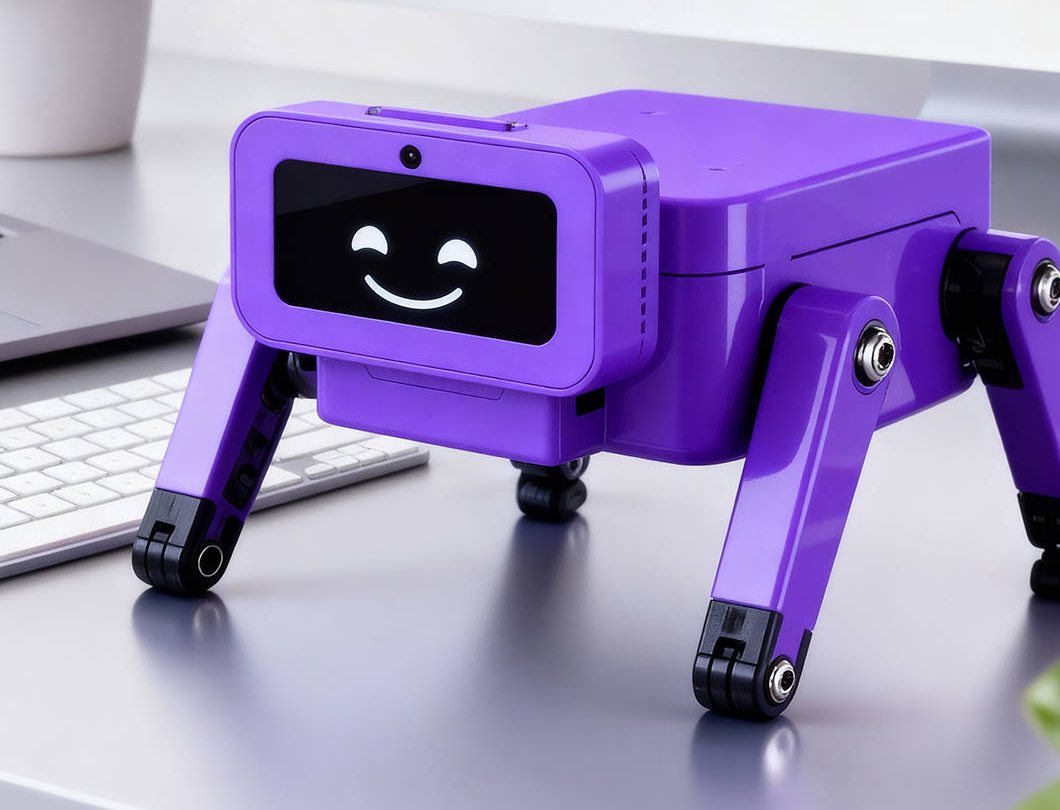
“Memory storage for elderly devices” is not a single pool but a tripartite model: transient (under 24 hours), session-bound (cleared on logout or 72-hour inactivity), and persistent (retained until explicit deletion or hardware end-of-life). Persistent memory includes only name pronunciations, preferred greeting phrases, and calendar reminders confirmed by the user during onboarding. No biometric templates, voiceprints or location history are retained beyond session-bound scope. The companion robot and smart health ring both follow this model, with persistent class size capped at 2 MB per unit — enforced at firmware level, not policy.Deletion Is a Path, Not a Button
Deletion occurs along four defined paths: user-initiated (via app or voice command “delete my memory”), caregiver-initiated (with PIN-confirmed role assignment in the companion app), time-triggered (persistent entries expire after 18 months unless reconfirmed), and hardware-triggered (full wipe on firmware update or factory reset *only* when initiated from the health smartwatch companion interface). There is no background auto-delete, no silent expiry, and no fallback to cloud backup. All paths are logged in volatile memory only — never persisted.Family Access Is Role-Bound, Not Shared
“Family access” means role-based delegation, not shared credentials. A primary caregiver may assign up to two secondary roles — “reminder manager” or “schedule reviewer” — each with read-only access to their assigned subset. No role permits export of raw logs or modification of retention timers. This applies equally to the learning pad and AI wearables line. Role assignment requires physical presence verification via NFC tap on the device, recorded only as a timestamped event — no identity data stored.Audit Readiness Starts at the Hardware Revision
Audit trails are not generated as files but verified through deterministic firmware behaviour. Each hardware revision books a test scope with an accredited laboratory covering EN 301 489-52 (EMC for data integrity) and EN 62368-1 (safety of persistent storage circuits). The CE RED document checklist includes retention logic verification for every radio-enabled model. No revision ships without signed test reports confirming that persistent memory cannot be recovered post-wipe using standard forensic tools.What This Model Cannot Do
This model does not support regulatory audit reporting — it has no exportable deletion log, no timestamped certificate of erasure, and no cryptographic proof of wipe. If your importer requires ISO/IEC 27001-aligned evidence of data destruction, this architecture does not comply. You must reject any supplier claim that “deletion is auditable” unless they provide a signed lab report showing generation, signing and export of a tamper-evident wipe receipt — a capability not implemented across the Health & Wellness line or product catalogue.Procurement and Compliance Checklist
| Decision Point | WingPhoenix Position |
|---|---|
| Persistent memory scope | Only user-confirmed preferences: names, greetings, calendar items. No sensor logs, voice recordings or location traces. |
| Default retention period | 18 months for persistent class; no auto-renewal. Confirmed re-entry required to extend. |
| Factory reset effect | Clears transient + session-bound only. Persistent requires full wipe command via app. |
| Export format | None. Data export is not supported — only deletion paths exist. |
| Third-party cloud dependency | None. All logic runs on-device or in customer-configured edge gateways. |
| Certified audit log | Not generated, stored or exportable. Verified via lab test of wipe determinism. |
| Caregiver role creation | Requires physical NFC tap; no remote provisioning or bulk assignment. |
| Firmware update impact | Triggers full wipe *only* if initiated from companion device with active session. |
Storage decisions affect compliance liability, not just feature sets. Before placing an order, confirm with your legal team whether your market requires verifiable deletion evidence — and if so, request the lab test summary for the specific hardware revision you intend to import. You can review lead times and sampling windows in the MOQ, sampling and lead times guide, and assess technical fit using the how to vet a supplier framework. For OEM/ODM customisation of retention logic, contact our engineering team — note that firmware white-label MOQ is 2,000 units.
Questions buyers ask
How is memory storage for elderly devices structured to meet EU and UK data law?
It is structured as three retention classes — transient, session-bound and persistent — each with defined deletion triggers, no automatic extension, and no cross-class migration. Deletion paths are explicit and user-initiated or time-triggered.
What does your finance team need to know about storage-related liabilities?
Storage does not incur recurring fees or cloud subscriptions; all retention logic runs on-device or in configurable edge gateways. No third-party cloud service is bundled, licensed or implied.
A distributor reports that a sample’s voice log was not cleared after factory reset — what is the root cause?
Factory reset clears only session-bound and transient memory; persistent memory requires a separate, documented “full data wipe” command issued via the companion app or web portal. This is intentional and aligns with EN 301 489-52 audit requirements.
What do most suppliers avoid naming directly?
That no WingPhoenix device holds a certified audit log of data deletion events — this report is not generated, stored or exportable. Auditors must verify deletion through device-level inspection or lab replay of the wipe command sequence.
Related: more on ai companions · buyer guides · customisation tiers